
Commercial Guide: Understanding Colour Temperature & CRI in Professional Lighting
Table of Contents
- Introduction
Best Colour Temperatures by Industry Sector
2.1 Hospitality Lighting: Setting the Mood
2.2 Retail: Enhancing Merchandise & Customer Flow
2.3 Offices & Workspaces: Boosting Productivity
2.4 Warehouses & Industrial: Safety and PrecisionThe Philips TrueForce LED Range: The Smarter Replacement for Discharge Lamps
Final Word: Why It Pays to Get Colour Temperature and CRI Right
LED Colour Temperature and Colour Rendering Index (CRI) Explained
Lighting plays a critical role in shaping how a commercial space is perceived and used. Whether you're managing a hotel, upgrading a retail unit, or running a production facility, understanding colour temperature and CRI (Colour Rendering Index) will help you select lighting solutions that boost performance, wellbeing, safety, and visual appeal.
As a Signify Gold Partner and specialist commercial lighting supplier, Lightsave brings deep sector knowledge and premium LED product access—including the Philips TrueForce range, NatureConnect, and Interact systems.
What is Colour Temperature?
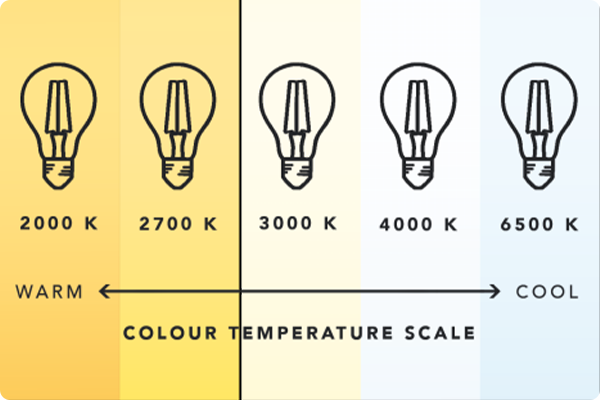
Colour temperature, measured in Kelvins (K), determines how ‘warm’ or ‘cool’ a light source appears:
- Warm White (2,000K – 3,000K): Soft, yellow-toned light
- Neutral/Cool White (3,000K – 4,500K): Brighter and crisper
- Daylight (5,000K – 6,500K): Blue-toned light, mimicking daylight
In a commercial context, choosing the right colour temperature can influence customer experience, employee productivity, and even brand perception.
Best Colour Temperatures by Industry Sector
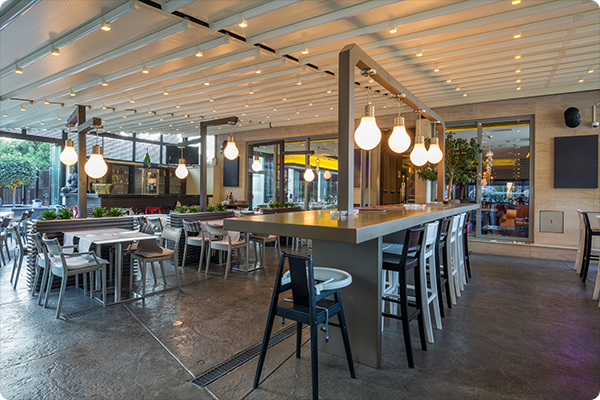
Hospitality Lighting: Setting the Mood
Lighting in hotels needs to balance comfort, elegance, and functionality:
- Reception / Lobby: 3000K–3500K
A warm, inviting light creates a positive first impression without being overly yellow. Consider tunable white solutions to adapt from day to night.
- Guest Bedrooms: 2700K–3000K
A restful, warm white that supports relaxation, sleep, and ambience.
- Corridors & Common Areas: 3000K–4000K
Brighter light improves navigation and safety while maintaining comfort.
- Restaurants & Bars: 2200K–2700K
Extra-warm white or dim-to-warm solutions enhance the atmosphere, especially in fine dining or lounge settings.
- Back-of-House / Kitchens: 4000K–5000K
Crisp, functional lighting for staff safety and efficiency.
Retail: Enhancing Merchandise & Customer Flow
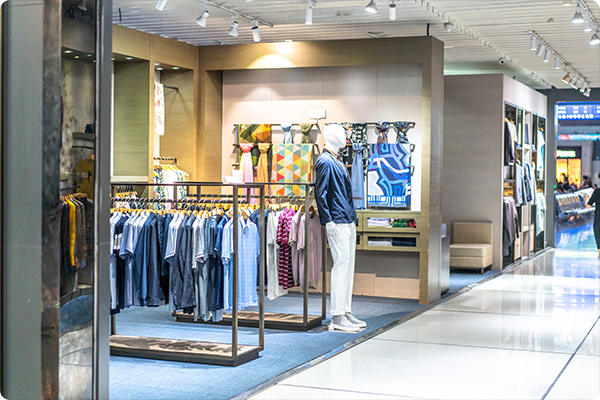
- Fashion / Footwear / Homeware: 3500K–4000K with CRI 90+
Colours appear vibrant and accurate, helping customers make confident purchase decisions.
- Supermarkets & Grocery: 4000K–5000K
Neutral or cool white supports visibility and cleanliness. High CRI improves the appeal of fresh produce and packaged goods.
- Changing Rooms: 3000K–3500K, CRI 90+
A warm, flattering light that gives customers a true sense of how items will look in daily life.
Offices & Workspaces: Boosting Productivity
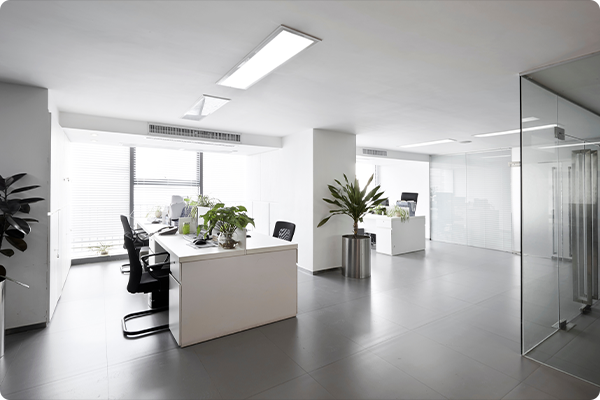
- Open Plan & Desks: 4000K–5000K
Cool white supports alertness and reduces eye strain.
- Meeting Rooms: Tunable white (2700K–5000K)
Adjust lighting to support different tasks, presentations, or collaborative sessions.
- Breakout Zones: 3000K–3500K
Warmer light encourages informal interaction and mental decompression.
Warehouses & Industrial: Safety and Precision
- Production Lines & Assembly Areas: 5000K–6500K, CRI 80+
Daylight-white lighting enhances visibility for detailed tasks and helps mitigate mistakes.
- Storage / Racking Areas: 4000K–5000K
Balanced cool white offers clarity while minimising eye fatigue.
- Loading Bays / Exterior Lighting: 5000K–6500K
Clear, glare-free LED lighting improves safety and coverage for shift work.

Why CRI Matters in Commercial Environments
CRI (Colour Rendering Index) measures how accurately a light source shows the true colours of objects compared to natural sunlight. It's rated from 0–100:
- CRI 80–85: Suitable for general commercial use
- CRI 90+: Ideal for sectors where visual precision is vital (hospitality, retail, galleries, healthcare)
A high CRI improves the way spaces feel and how people interact with them:
- Clothing looks true-to-life in retail settings
- Food appears fresh and appetising in restaurants
- Artwork and branding stand out under accurate lighting
- Staff can perform colour-sensitive tasks (e.g. wiring, packaging, inspection) more efficiently
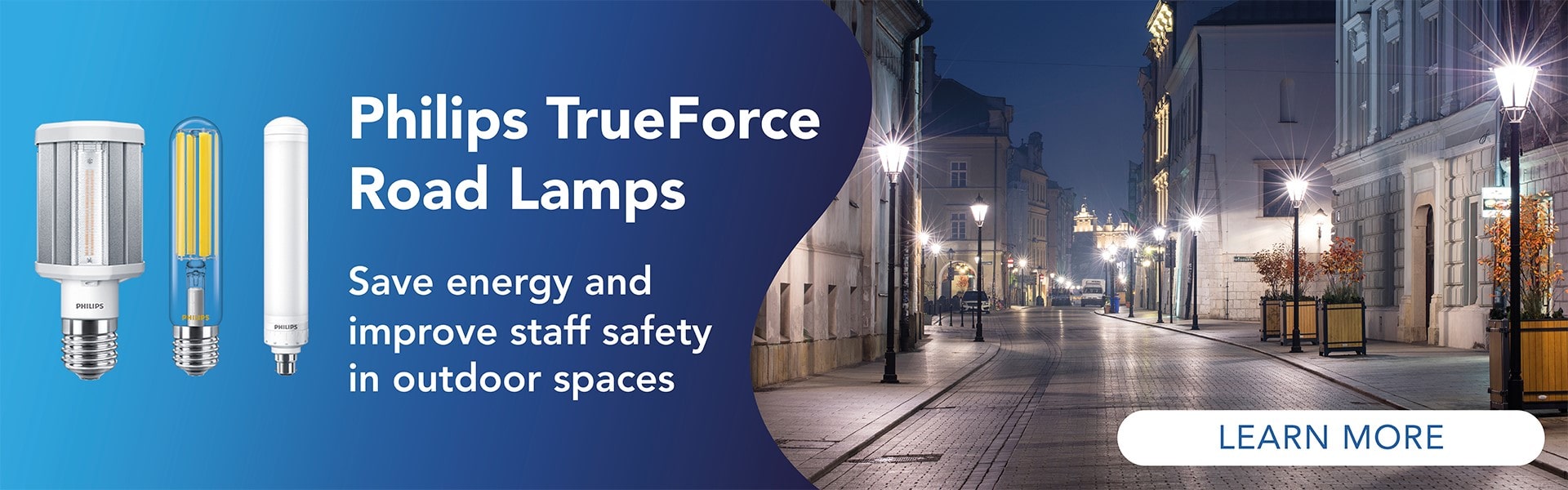
The Philips TrueForce LED Range: The Smarter Replacement for Discharge Lamps
As traditional HID (High Intensity Discharge) and sodium lamps are phased out, the Philips TrueForce LED range offers a reliable, energy-efficient retrofit solution.
Key Benefits for Commercial Clients:
- Multiple colour temperature options up to 6500K
- Instant full brightness – no warm-up time or flickering
- Up to 80% energy savings
- Significant reduction in maintenance costs – LEDs last up to 8x longer than traditional lamps
- Lower light pollution thanks to precise optical control
Ideal for:
- Car parks & outdoor lighting
- Warehouses and high bay settings
- Street lighting & external pathways
- Industrial units and sports halls
TrueForce also supports your sustainability goals by reducing both energy use and environmental disruption.
Final Word: Why It Pays to Get Colour Temperature and CRI Right
Choosing the right combination of colour temperature and CRI:
- Enhances your brand and customer experience
- Improves staff productivity and well-being
- Reduces operating costs over time
At Lightsave, we support commercial clients across hospitality, retail, logistics, education, and more. As a Signify Certified Systems Integration Gold Partner, we not only supply advanced lighting products but also advise on project-specific needs, lighting design, and ongoing maintenance.
Need help specifying lighting for your next project?
Speak to a Commercial Lighting Specialist.
Whether it's a hotel renovation, retail refit or manufacturing upgrade, Lightsave is here to help.